
AI on the Jobsite: How Artificial Intelligence Is Transforming Utility Construction Across New England
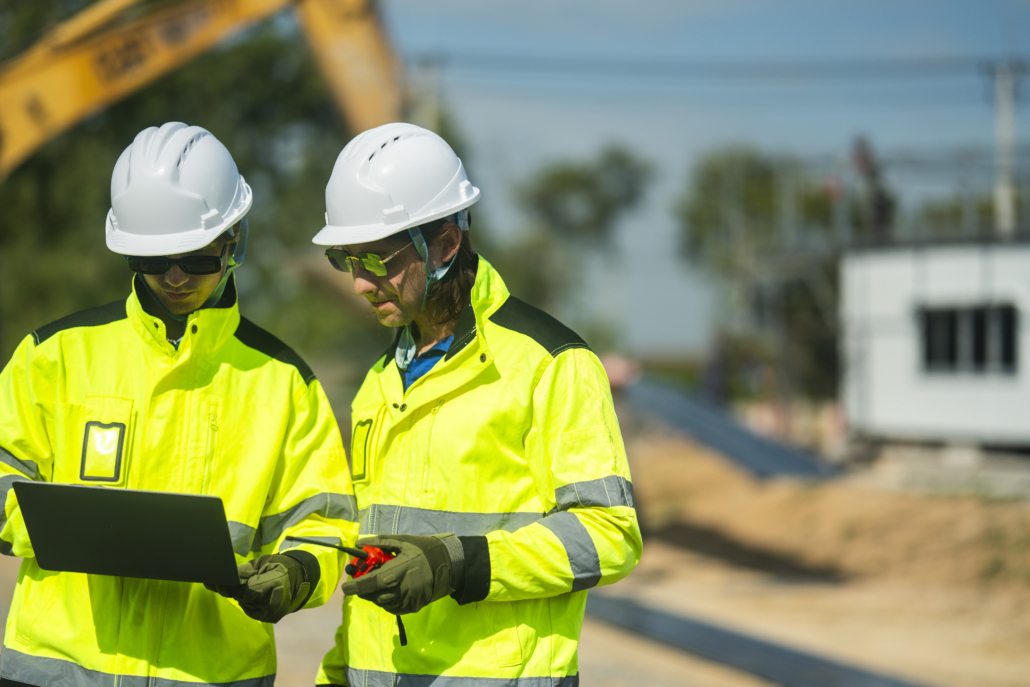
Artificial intelligence (AI) has moved far beyond Silicon Valley labs and software companies. It is now being integrated into the everyday tools, processes, and systems deployed in the field. AI is reshaping construction sites, including some of the most demanding work environments in the Northeast. For utility contractors working throughout New England, AI is quickly becoming an essential field tool.
The region’s aging underground infrastructure, congested urban work zones, short construction seasons, Dig Safe coordination, and weather-driven delays place unique pressures on contractors. AI is helping crews meet these challenges with improved hazard detection, more reliable planning, smarter tools, and real-time insights that support safer, more predictable operations.
AI does not replace the practical knowledge of linemen, operators, and laborers; instead, it complements their experience. By capturing site conditions more accurately, predicting risks earlier, and reducing routine administrative tasks, AI is allowing workers to focus on skilled tasks, coordination, and situational awareness.
With workplace fatalities in construction remaining disproportionately high – accounting for one in five worker deaths across all industries, according to recent OSHA data – the integration of AI and advanced technological solutions represents more than innovation; it embodies a critical evolution toward protecting human lives.
The Role of AI in New England Utility Work: Meeting Regional Challenges
Utility construction in New England is different from many other parts of the country. Crews navigate narrow historic streets, high-density corridors layered with utilities more than a century old, complex permitting requirements, and an expectation from municipalities that traffic impacts be minimized at all costs.
AI-powered survey and site analysis tools align well with these realities. They help verify safe trench configurations, document every stage of excavation, monitor proximity to hazards, predict weather-related delays, and improve communication with inspectors and utility owners.
For contractors managing work at height or in confined spaces, combining AI with robust high angle rescue training and confined space training offers a strategic advantage in both safety and efficiency.
Improving Safety Through Earlier Insight
Computer vision systems automatically identify missing PPE, unsafe trench setups, or worker positioning near hazards. Drones add value by inspecting overhead trench conditions, mapping utility corridors, and reducing confined space entry exposure.
Drones excel at accessing areas that are dangerous or impossible for human inspectors to reach safely. High-rise construction zones, active crane operations, and unstable structures can all be thoroughly inspected without exposing personnel to risk. Fall protection training combined with drone oversight can significantly reduce incidents in these environments.
Contractors in Massachusetts have already demonstrated improved hazard identification using AI-driven image analysis. Smartvid.io’s “Vinnie,” for example, flagged numerous PPE issues on Boston projects—insights directly relevant to trenching and utility work.
Productivity Gains
AI supports better material forecasting, equipment maintenance predictions, and progress tracking. For multi‑mile utility corridors or weather‑sensitive schedules, these insights help prevent delays, reduce rework, and streamline logistics.
Implementation Challenges
Upfront costs, training, data quality, and privacy concerns require careful planning. Connectivity remains a challenge in rural to semi‑rural areas of New Hampshire, Maine, and Vermont. Piloting AI in a small portion of field operations helps build confidence and measure benefits.
ISR recommends pairing technology implementation with hands-on first aid training and CPR/AED training to ensure your team is fully equipped to respond when digital monitoring uncovers risks in real time.
Common Questions
How is AI used in construction today?
Common applications include safety monitoring with computer vision, predictive maintenance for heavy construction equipment, generative design, drone-based reality capture, and analytics that compare planned vs. actual progress.
Does AI create cybersecurity risks?
Yes, requiring strong vendor controls and encrypted data handling along with cybersecurity threats and worker privacy concerns.
Will AI eliminate jobs?
AI is more likely to augment skilled workers by automating repetitive tasks and providing better information—allowing crews and project managers to focus on coordination, quality, and safety.
Pros and Cons at a Glance
Advantages: improved hazard detection, emergency response support, better planning, real‑time visibility, enhanced training, and stronger documentation.
Limitations: cost, privacy concerns, reliance on connectivity, skepticism among workers, and risk of overreliance on algorithms.
Balancing these benefits and challenges is essential for sustainable, responsible integration.
Looking Ahead: An Ethical, Balanced Approach to a Safer Future
AI will continue merging with BIM, GIS, GPS‑guided machinery, and IoT sensors buried alongside new utilities. For New England contractors, blending AI with traditional field expertise will produce the best outcomes.
Construction leaders must ensure:
- AI supports—not replaces—human expertise
- Workers are trained and empowered, not monitored into distrust
- Privacy and data protection policies are robust and transparent
- Investments in technology include investments in people
- AI systems are used ethically and with careful oversight
The digital safety revolution in construction is not a distant possibility anymore—it is happening now, transforming job sites across the globe and saving lives every day.
How prepared is your team for what’s next?
Visit our Training and Education page to explore how ISR can support your workforce as technology and safety evolve side by side.

Leave a Reply
Want to join the discussion?Feel free to contribute!